Tree Removal Woodstock: When Is It Time to Remove a Tree?
Trees add shade, beauty, and value to any Woodstock property, but not every tree stays healthy or safe forever. Knowing when a tree has become a liability rather than an asset can save homeowners from costly property damage and serious injury. In this guide, we walk through the warning signs, risk factors, and process behind professional tree removal Woodstock property owners can trust, helping you make an informed decision.
Why Timely Tree Removal Is Important
Acting quickly when a tree shows signs of decline is one of the most important steps a homeowner can take to protect their property. A tree that looks fine from a distance may already be weakened at the roots, in the trunk, or in its upper limbs, and that damage rarely improves on its own. The longer a hazardous tree is left standing, the greater the chance it fails during high winds, heavy rain, or even on a calm day once internal decay reaches a tipping point.
Beyond safety, timely removal also protects the health of the surrounding landscape. A dying or diseased tree can spread pests and pathogens to nearby trees, shrubs, and lawns, turning a single problem into a much larger one. Removing a compromised tree early, before it becomes an emergency, is almost always simpler, safer, and more affordable than dealing with storm damage or a collapse after the fact.
Warning Signs That a Tree May Need to Be Removed
Most trees give warning signs long before they fail. Learning to recognize these signs helps homeowners decide when to call in a tree removal service Woodstock GA residents can rely on for a closer look:
- A noticeable lean that is new or has worsened over time
- Large dead branches throughout the canopy, or a canopy that is thinning unevenly
- Cracks, splits, or vertical seams running along the trunk
- Fungus, mushrooms, or conks growing at the base or on the bark
- Peeling, missing bark, or exposed wood on the trunk
- A hollow sound when the trunk is tapped, or visible cavities
- Roots that are damaged, cut, lifted from the soil, or showing significant decay
- Sudden leaf drop or discoloration outside of the normal season
Any one of these signs on its own may not mean a tree has to come down. Still, several appearing together, especially in a mature or large tree, is a strong indicator that a professional assessment is worth scheduling.
When a Dead or Dying Tree Becomes Dangerous
A dead tree does not fall apart gradually and predictably. As the wood dries out and decay sets in, branches and even the entire trunk can become unstable and give way with little or no warning, often without a storm to trigger it. This is what makes standing dead trees, sometimes called “widowmakers,” especially dangerous near homes, driveways, walkways, and anywhere people or vehicles regularly pass.
The danger increases the closer a dead or dying tree is to a structure or a high-traffic area. A large limb or an entire trunk falling on a roof, vehicle, fence, or power line can cause significant damage and put anyone nearby at risk. Once a tree is confirmed dead or is dying with no realistic chance of recovery, removal is typically the safest and most responsible course of action, rather than waiting to see how much further it declines.
Tree Removal After Storm Damage in Woodstock
Woodstock’s mix of seasonal thunderstorms, occasional high winds, and heavy rainfall can take a real toll on trees, even ones that appeared healthy beforehand, which is why Woodstock tree removal requests often spike after severe weather. Storms can snap large limbs, split trunks, uproot shallow root systems, and leave trees leaning at unsafe angles. In many cases, the visible damage is only part of the story, since internal stress from wind and saturated soil can weaken a tree well beyond what is obvious from the ground.
After a storm, it is worth having any tree that was bent, cracked, uprooted, or heavily stripped of branches evaluated before deciding whether it can be saved or needs to come down. A tree that survives one storm with hidden damage is often at much greater risk of failing during the next one. Prompt post-storm removal of compromised trees helps prevent secondary damage to roofs, fences, vehicles, and utility lines while the property is already recovering.
Should a Diseased Tree Be Removed?
Not every diseased tree needs to be removed immediately. Many diseases, especially when caught early, can be managed with proper pruning, treatment, and ongoing care that allows the tree to recover over time. The right approach depends on the type of disease, how far it has progressed, the tree’s overall structural condition, and how essential the tree is to the surrounding landscape.
Removal becomes the safer option when a disease has spread through a significant portion of the tree, when it has caused structural weakness in the trunk or major limbs, or when it threatens to spread to other healthy trees nearby. A trained eye can often tell the difference between a tree that will respond well to treatment and one that has passed the point where saving it makes sense. When in doubt, an on-site evaluation is the most reliable way to get a clear answer.
Tree Removal Near Homes, Driveways, and Utility Lines
Trees growing close to homes, driveways, and utility lines require extra caution, both in day-to-day maintenance and when removal becomes necessary. A tree that fails near a structure can cause damage to a roof, siding, or foundation, while a tree near a driveway can block access or damage a parked vehicle. Overhead utility lines add another layer of risk, since falling limbs or an entire tree can cause power outages, fire hazards, or dangerous contact with live wires.
These situations call for careful planning, specialized equipment, and often coordination with the local utility company before any cutting begins. Ropes, cranes, and controlled sectional cutting are commonly used to lower limbs and trunk sections in tight spaces, protecting nearby structures and lines rather than allowing anything to fall freely. Attempting this type of removal without the right training and equipment is one of the most common ways homeowners and untrained crews get seriously hurt.
Can Tree Trimming Prevent Tree Removal?
Regular trimming and pruning are among the most effective ways to extend a tree’s healthy life and, in many cases, help avoid removal altogether. Removing dead, damaged, or crossing branches reduces the weight and wind resistance in the canopy, improves airflow and sunlight penetration, and lowers the chance that a single weak limb leads to bigger structural problems down the road.
That said, trimming has limits. It can address surface-level issues and slow the progression of some problems. Still, it cannot reverse significant trunk decay, extensive root damage, or advanced disease that has already compromised a tree’s structural integrity. A qualified assessment can determine whether trimming is enough to keep a tree safe and healthy or whether the underlying issues have gone too far for pruning alone to fix.
What to Expect During Professional Tree Removal
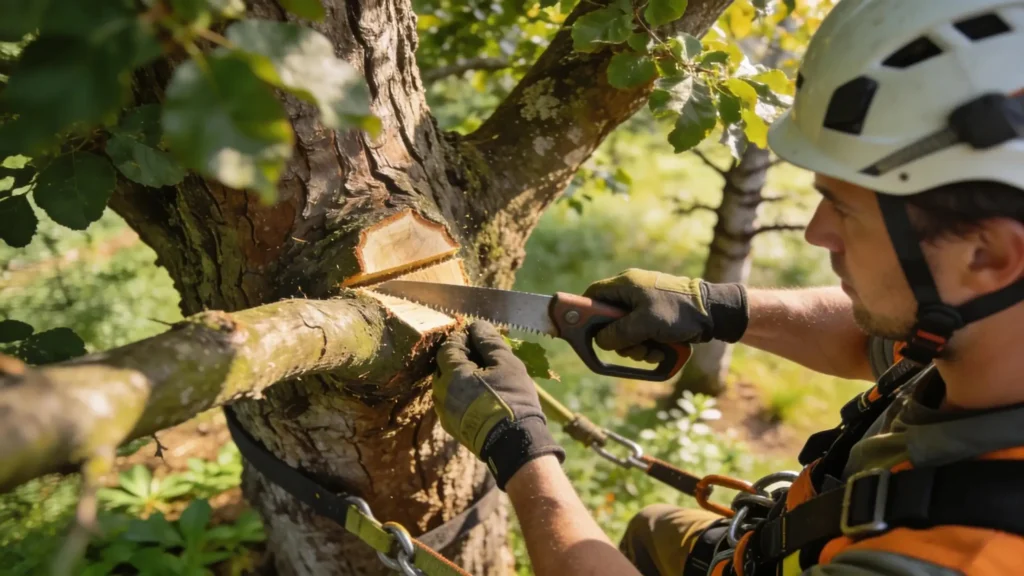
Professional tree removal follows a careful, methodical process designed to protect the property, the crew, and anyone nearby. It typically begins with an on-site assessment to evaluate the tree’s condition, size, lean, and proximity to structures, power lines, and other trees. From there, a removal plan is developed, which may involve climbing, rigging, or a crane depending on the tree’s location and the space available.
During removal, limbs are typically taken down first in controlled sections, followed by the trunk, which is cut down in manageable pieces rather than felled all at once when space is limited. Safety equipment, drop zones, and traffic or pedestrian control are set up in advance to keep the work area secure throughout. Once the tree is down, the crew handles cleanup, which usually includes chipping brush, cutting the trunk into manageable rounds, and clearing debris so the property is left tidy. Stump grinding or removal can often be scheduled as an additional step if desired.
How Much Does Tree Removal Cost in Woodstock?
Tree removal Woodstock GA costs vary widely because so many factors play into the scope of the job. A tree’s height, trunk diameter, and overall condition all affect how much time and equipment the job requires, as do its location and accessibility. A tree in an open backyard with plenty of clearance is generally more straightforward than one growing close to a home, tangled in power lines, or situated where a crane cannot easily reach.
Other factors that influence pricing include whether the tree is standing dead or already damaged, how much cleanup and debris removal is needed, and whether stump grinding is included. Because every property and every tree is different, the most accurate way to understand cost is through an on-site evaluation rather than a general estimate. A written quote after an in-person assessment gives homeowners a clear, honest picture of what the job will involve before any work begins.
Choose TruCutter Tree Services for Tree Removal in Woodstock
When a tree on your property shows warning signs, has been damaged by a storm, or has outlived its safe lifespan, Tree Services Woodstock, GA is ready to help. Our team brings hands-on experience assessing trees of every size and condition, and we approach every job with the safety of your home, family, and neighbors as the top priority. From the initial evaluation through final cleanup, we handle each removal with the care and precision that comes from years of working in Woodstock’s varied landscapes and weather conditions.
We understand that removing a tree is not a decision homeowners make lightly, which is why we take the time to explain what we find, walk through the options available, and provide clear, honest guidance every step of the way. Whether the concern is a leaning tree near the driveway, storm damage from last week’s weather, or a slow decline that has finally reached a tipping point, our team has the training and equipment to remove it safely and responsibly.
Request a Tree Assessment and Estimate
If you have noticed any of the warning signs above, or want peace of mind about a tree on your property, we encourage you to reach out for a professional assessment. Call Tree Services Woodstock, GA at 770-874-7745 or email trucutterwoodstock@gmail.com to schedule a visit and receive a clear, no-pressure estimate for your tree removal needs.